
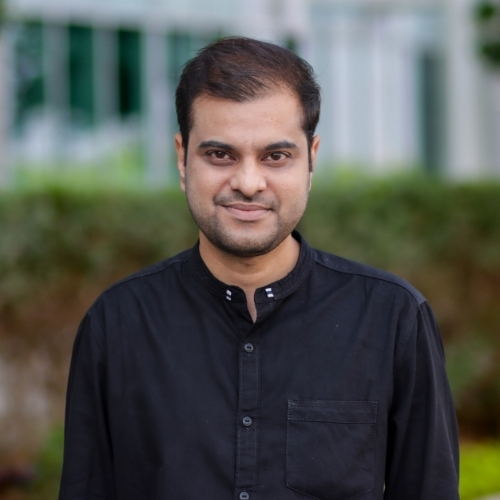
Dr Arijit Datta, Assistant Professor, Department of Electronics & Communication Engineering, SRM University-AP.
Research Integrity in a Changing World
Scientific research plays a vital role in advancing knowledge, fostering innovation, and addressing societal challenges. Rapid developments in artificial intelligence (AI), computational modelling, and digital technologies have made research faster and more accessible. However, they have also raised concerns about academic honesty, data authenticity, and responsible technology use. Research ethics extends beyond preventing plagiarism to ensuring originality, transparency, and accountability throughout the scientific process.
Ethical Challenges in the Digital Research Environment
AI-based tools can assist with literature reviews, data analysis, programming, and manuscript preparation, but excessive reliance on them may weaken independent scientific reasoning. AI-generated material can include inaccurate explanations or fabricated references and must therefore be verified. Selective reporting, inappropriate image manipulation, and misleading statistical analyses can also compromise research credibility. For example, a high mathematical fitting accuracy does not necessarily demonstrate the physical validity of an experimental relationship. Meanwhile, pressure to publish can encourage a focus on publication counts rather than the quality and reliability of scientific contributions.
Strengthening Research Integrity and Scientific Accountability
Responsible research requires accurate experimental records, transparent methodologies, and reproducible findings. Researchers should preserve original datasets, report relevant simulation parameters, acknowledge measurement uncertainties, and substantiate conclusions with verifiable evidence. AI-assisted outputs should be critically reviewed, with researchers retaining responsibility for the final work. Universities and research institutions can strengthen integrity through doctoral training, ethical supervision, and fair evaluation practices that recognise originality, methodological rigour, and meaningful scientific contributions.
Building a Responsible Future for Scientific Research
Digital technologies offer remarkable opportunities for scientific discovery, but technological sophistication cannot replace intellectual honesty and independent judgement. Researchers, institutions, and publishers must collectively safeguard the reliability of scientific knowledge. Ultimately, scientific excellence should be measured not merely by the number of publications or the speed of discovery, but by the integrity, credibility, and lasting value of the knowledge generated.


